An analogue lens in a digital AI world
"Technology challenges us to assert our human values, which means that first of all, we have to figure out what they are."
— Sherry Turkle
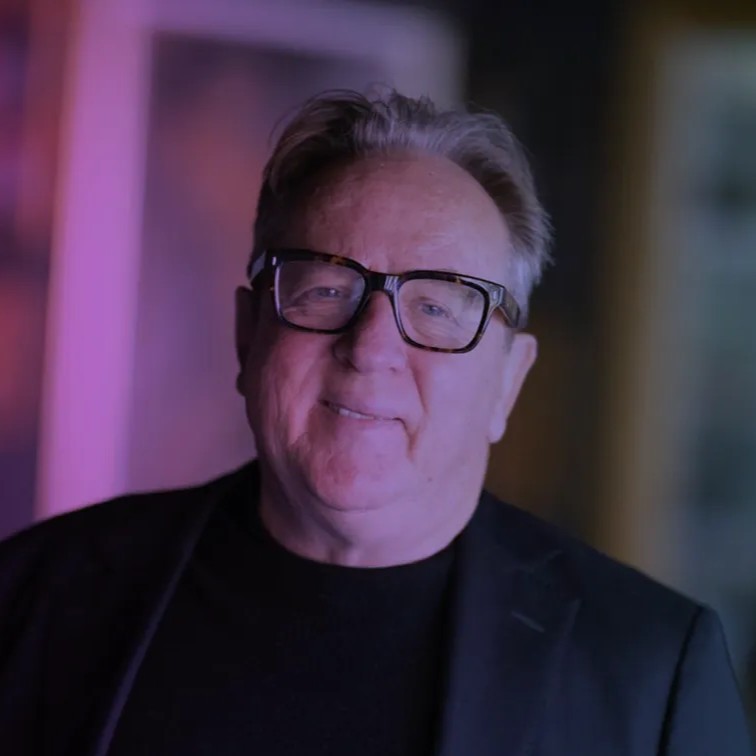
By featured writer: Paul Greenberg, chair, NORA
10 JUNE 2026 • 4 MIN READ

I was at a high-tech show in Las Vegas a few years ago. The latest high-resolution technology was on dazzling display. Keynote speakers spoke passionately about the chip revolution and the promise of artificial intelligence.
I should have been immersing myself completely in the innovation and the latest insights. I had been a regular attendee at these techfests for decades. Yet, for the first time, I found myself strangely disconnected from the buzz. Walking past a merchandise stand, I spotted a black T-shirt with the words “An Analogue Soul Caught in a Digital World” printed across the front.
I smiled and bought the shirt.
I entered the world of ecommerce as a digital immigrant in the mid-1990s, gathering momentum through the late '90s and the 2000s. Today, I still work in and around technology-led commerce—primarily as an investor, adviser and board member. Keeping pace with the relentless speed of technological change is becoming increasingly difficult. Is that simply a function of age? I don't think so.
Rather, I have consciously chosen to occupy a respectful contrarian position to the dominant narrative of a future driven almost entirely by technology—one where AI is said to be "eating the world." As is often the case, these predictions are highly binary and tend to overlook the lessons I've learnt over the past three decades.
The biggest lesson?
The game is almost always played—and won—down the middle of the field. Around 2014 or 2015, I was credited with coining the term phygital. In truth, I doubt I deserve the credit; I probably first heard it at one of the retail conferences in the US or Europe. But the truth behind the term resonated deeply with me then, and it still does today.
In a nutshell, phygital captured the idea that the best retailers would embrace both the physical and digital pathways to the customer. At a time when pure-play ecommerce was rapidly gaining traction, I, along with many industry peers, came to the conclusion that customers shop by brand, not by channel.
As an industry, we were in danger of developing what I called "channel fever" — an obsession with choosing a lane when our customers never did. They moved effortlessly between physical stores, websites and mobile devices, expecting us to do the same.
Eventually, we learnt. We adapted. Today, what was once called multi-channel retail has become simply… retail.
I sense that commerce is once again approaching one of these binary crossroads.
This time, the choice appears to be between artificial intelligence and human connection. I suspect that, once again, the winning strategy will lie somewhere in between.
The intersection between this extraordinary AI technology and a deeper understanding of customers will require as much traditional analogue thinking as it will a wholehearted embrace of AI tools. Success will come not from choosing one over the other, but from integrating both.
However, while the strategy may be non-binary, our professional expertise may not be.
As practitioners, I suspect we will increasingly need to choose where we develop true mastery. The depth of knowledge required to remain at the forefront of AI is immense. Equally, developing deep expertise in consumer psychology, anthropology, behavioural science and human motivation is a lifelong pursuit. It will become progressively harder to be world-class in both.
I've made my choice.
I'm doubling down on the human side of the commerce equation.
I proudly declare myself an analogue proponent.
That doesn’t mean becoming a technological Luddite. Far from it. I'll remain curious and continue experimenting with the remarkable technologies emerging around us and the countless opportunities they present.
But I make no apology for returning to my roots as a student of the humanities. I began my career in psychological services as a young organisational psychologist. It is with that lens that I increasingly see my career reaching its natural conclusion. In many ways, I've come full circle.
If a young person asked me today what they should study, my advice would be surprisingly simple. Study one of two things exceptionally well.
Either become deeply technical—immersing yourself in AI, machine learning and advanced computing—or immerse yourself in the humanities: psychology, sociology, anthropology, philosophy, history and ethics.
The future will belong to those who can either build intelligent machines or deeply understand the humans who use them.
In fact, I suspect the much-maligned Bachelor of Arts is quietly making a comeback. As AI commoditises technical capability, uniquely human capabilities—curiosity, judgement, empathy, creativity and wisdom—become more valuable, not less.
The new world won't be built by technology alone.
It will be built at the intersection of science and humanity.
Perhaps that T-shirt from Las Vegas was less a joke than a prediction. I'm proudly an analogue soul, happily living—and working—in a digital world.”
I will leave the final word to Steve Jobs, whose philosophy perhaps captured this balance better than anyone: "Technology is nothing. What's important is that you have faith in people, that they rebasically good and smart, and if you give them tools, they'll do wonderful things with them."
Join the Conversation

Your perspective adds to our story.
Loading comments...
RELATED ARTICLES
share article


Industry-level consequential insights delivered to you. Subscribe.
